
You’ve signed the contract; now the pressure is on. You want to see results, and you need to see them fast.
Many small business owners want quick wins in the early months.
I understand your goal because you want a good return on your investment.
In this blog post, I’ll explain how to manage client expectations in the first 6 months with your service provider. You’ll also learn about your role during this period.
A marketing agency should have a transparent SEO roadmap from day one until month 6.
GroXcelent takes your SME through a predictable 6-month SEO plan to achieve your revenue goals.
Key Takeaways:
- Clear communication is essential to ensure both parties understand goals, deliverables, and timelines.
- Setting realistic client expectations from the outset can prevent misunderstandings and disappointments later on.
- Regular updates and transparency about progress help maintain trust and a strong working relationship.
How Does Setting the Stage Look? The First 30 Days
TL;DR: The first 30 days are about discovery and alignment. The agency should get to know you, and you should ensure they understand your goals.
This is the “Discovery” phase. The marketing partner should conduct a deep dive into your:
- Business (your mission, values & unique selling points).
- Target audience (you must have a buyer persona or ideal customer profile, ICP).
- Current marketing efforts (SEO/GEO, ads, email marketing, social media).
- Competitors (direct and indirect).
- Content assets (website content, product/service images).
- Technical SEO (broken links, URLs, canonical tags, redirects, schema markup, loading speed, and indexing issues)
- Marketing in-house team (sales, SEO, and product/service)
They should also work with you to set clear, measurable goals and a customized marketing strategy. This is the most important phase to ensure you move in the same direction with your service provider.
Also, the discovery stage prevents problems like misalignment of goals and disputes in the future. If you start on the same footing, you can handle client expectations effectively.
As a result, you can develop a win-win relationship with your outsourced company.
Stronger relationships build stronger businesses. Aprais
Here are actionable insights in the first 30 days:
- What the agency should do: Audit your existing marketing efforts and align on clear, measurable goals.
- What you should do: Provide access to all relevant data (sales, SEO) and systems (Google Analytics, Google Search Console, CMS, social media, and other analytics tools) and be transparent about your business challenges and priorities. Let the agency know about your current team.
Working with GroXcelent puts you on a predictable SEO and GEO growth path.
Here’s how the first 4 weeks look:
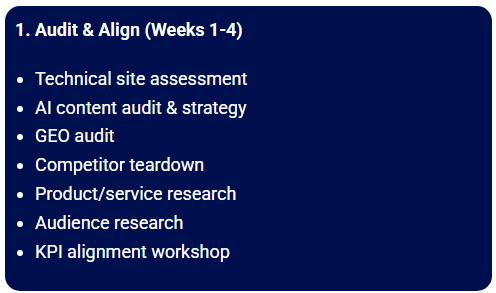
The first 30 days are referred to as the ‘Discovery’ phase, during which the agency learns more about your business. And it’s the right time to present client expectations and give access to crucial marketing data.
What Are the Quick Wins and Momentum in Months 2-3?
TL;DR: The “Execution” phase should focus on delivering initial, tangible results to build confidence.
Your agency should focus on low-hanging fruit, such as optimizing existing campaigns, creating new content for traditional and AI search engines, and resolving technical issues with your website.
As an SEO and content marketing strategist with 6+ years in marketing, I know that SEO isn’t a sprint. It’s a marathon.
However, your digital marketing agency should deliver initial, visible results to show progress.
Here are the actionable insights in months 4-6
- What the agency should focus on: Targeting low-hanging fruit, delivering initial, tangible results, and providing proactive and transparent reporting.
- What you should look for: Initial improvements in key metrics (AI visibility) and consistent communication from your account manager. There should also be evidence that the agency is invested in and understands your business.
At GroXcelent, we understand you want to see immediate results in your marketing campaigns.
To manage client expectations, the next 2-3 months with us look like this:
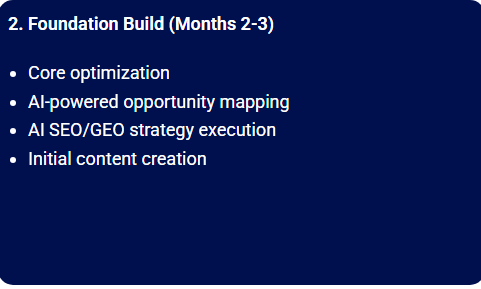
Your agency enters the ‘Execution Phase’ in 2-3 months. They should demonstrate early progress in achieving quick wins, such as AI visibility.
How To Prove Long-Term Value in Months 4-6
TL;DR: The “Optimization” phase is when the agency shifts from short-term gains to sustainable, long-term growth.
Your marketing agency should analyze initial campaign data to refine its strategy. And present a clear roadmap for the next six months and beyond.
They must also hold strategy workshops to discuss the outcomes, any missed targets, and the way forward.
Here are a few actionable insights in 4-6 months:
- What the agency should do: Analyze initial campaign data, scale successful initiatives, and present a clear roadmap for the next six months.
- What you should look for: A shift from short-term gains to sustainable, long-term growth and reports that directly connect marketing spend to revenue outcomes.
As the GroXcelent team enters the fourth month and beyond, its focus shifts to momentum growth and scaling profitable channels.
Here is what it looks like in the optimization phase:
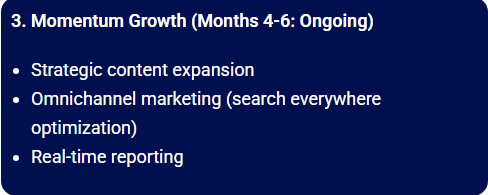
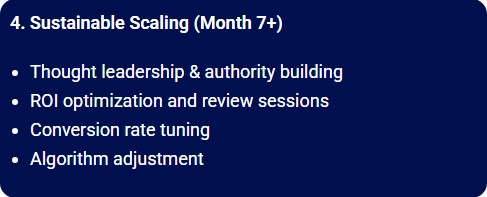
Our SEO roadmap ensures your brand achieves quick wins in the first months and becomes laser-focused on your return on investment in the months that follow.
In summary, your SEO journey with us looks like this:
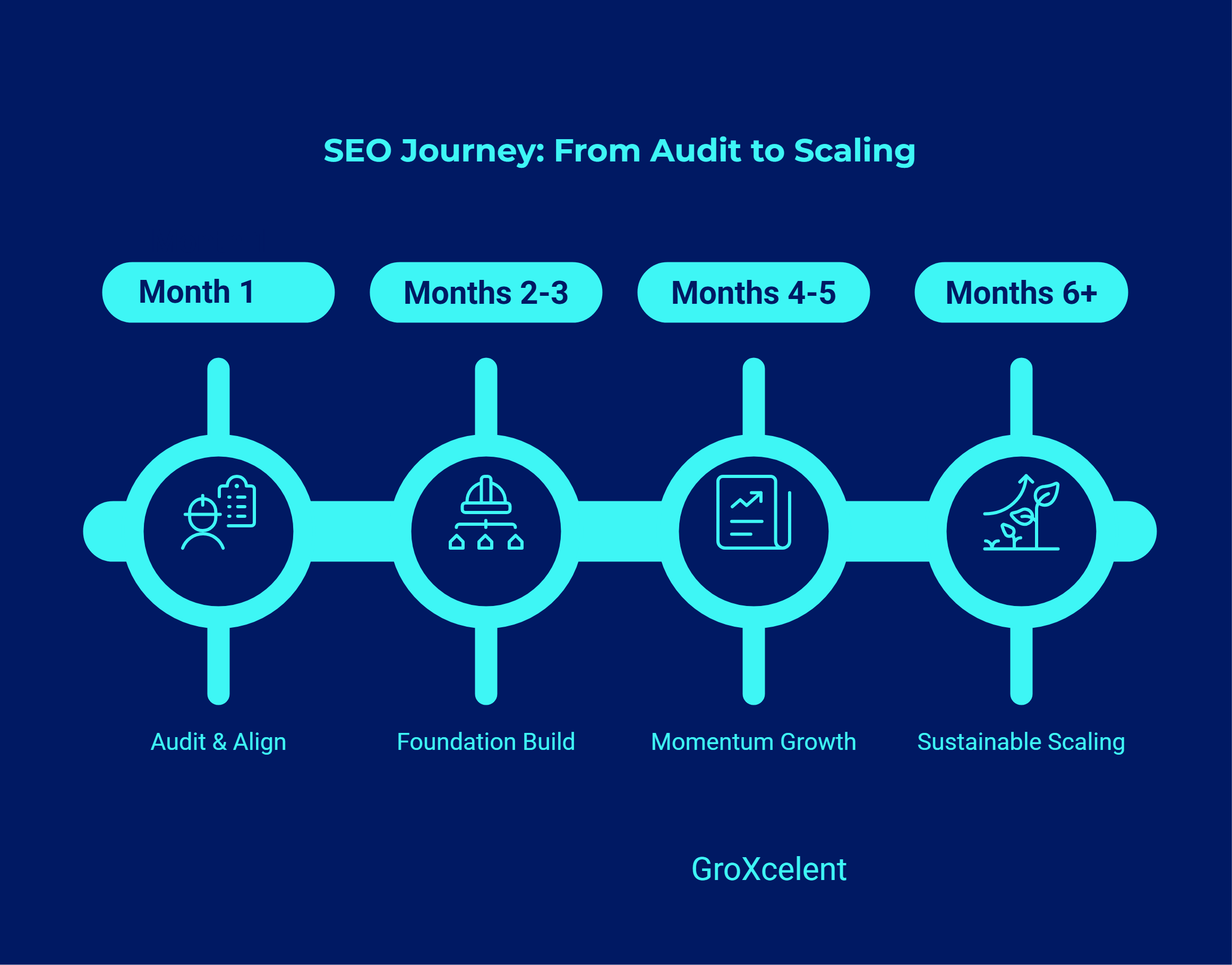
The ‘Optimization’ phase involves changing from short-term goals to sustainable growth that focuses on revenue.
How to Avoid the “Prove It” Failure
TL;DR: The most common reasons for agency churn are poor communication and a lack of partnership.
Here are more reasons for a high churn rate:
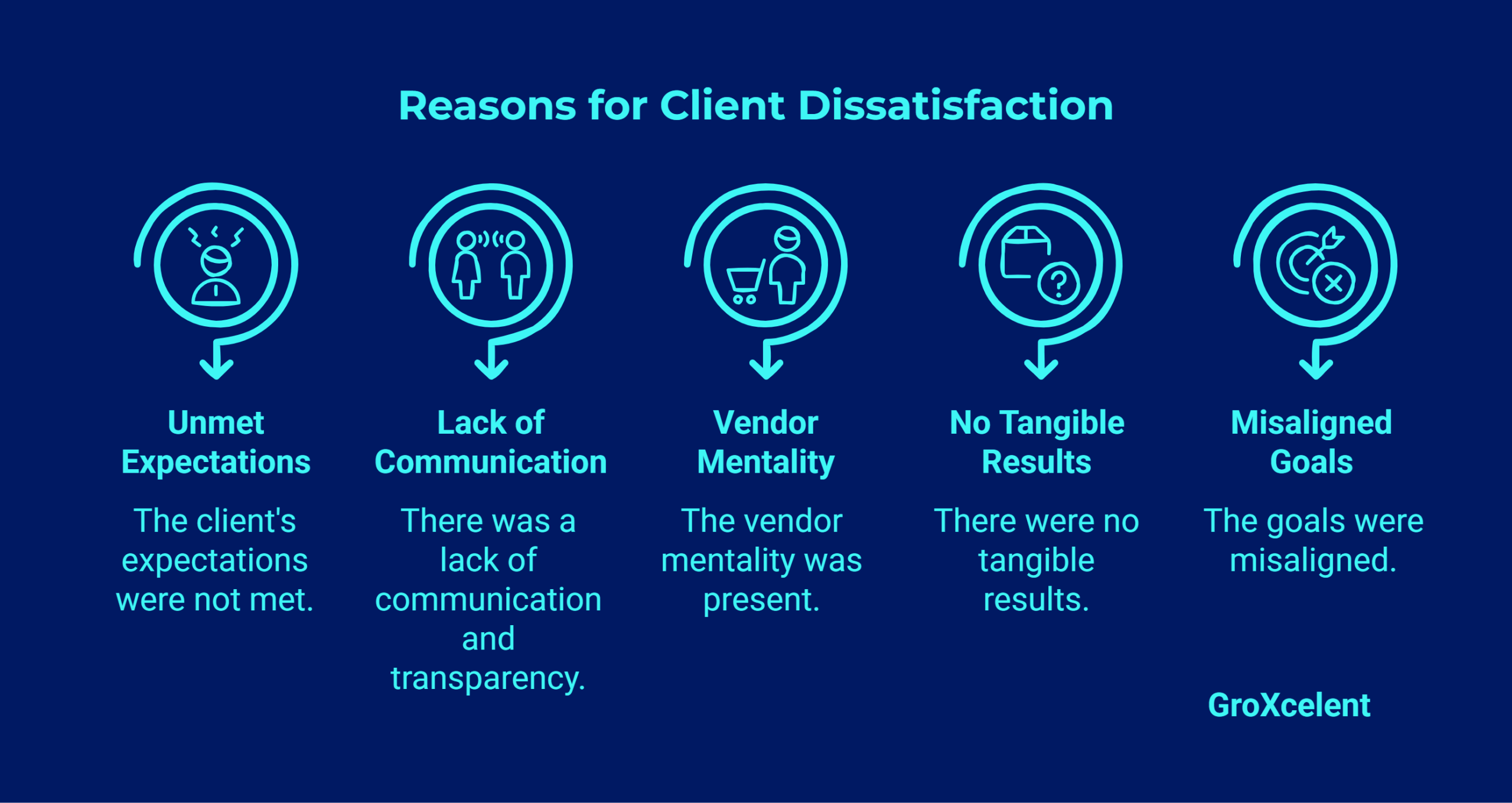
Avoid the common pitfalls that lead to churn by focusing on key factors for success:
- Clear communication from day one: You and your agency should be on the same page from the beginning. Each party must be clear about what they offer and want in the partnership.
- Mutual accountability: Both you and the agency should be accountable for your respective roles. The outsourced company must commit to delivering high-quality services. Your role is to support it by providing all the necessary details and making payments on time.
- A shared definition of success: You and the agency should agree on what a “win” looks like. What are the key metrics in the short and long terms?
- The ability to have difficult conversations: You should be able to have open and honest conversations with your agency. Let your service provider know if you’re not pleased with something. Be respectful and polite. Also, appreciate the achievements along the way.
For handling client expectations, Don Crawley, the author of The Compassionate Geek, recommends that agencies and customers:
Establish clear communication
Set goals, limits, and expectations
Set clear deliverables
Establish regular communication
FAQs on Managing Client Expectations
| What are the responsibilities of an agency? The agency should understand your business goals, values, customers, product/service, and unique selling proposition; agree on deliverables; establish clear communication; and offer high-quality service. |
| What is the role of a client in the relationship? The client should be transparent about their priorities and challenges and provide access to business accounts. They must also pay on time. |
Conclusion
The first six months of an agency relationship aren’t just about results. They also include building a relationship based on trust and tangible results.
To ensure an agency delivers tangible business results, it should take your brand through three phases: the discovery, execution, and optimization processes.
By setting client expectations from the outset, you can develop a strategic partnership with your marketing agency.
GroXcelent is an AI SEO agency that integrates SEO, content, social media, digital PR, email, and paid search strategies into a unified revenue accelerator.
Want to collaborate with a predictable service provider and scale your business? Get your free SEO audit to find high-impact opportunities today.